Kristine Robertson
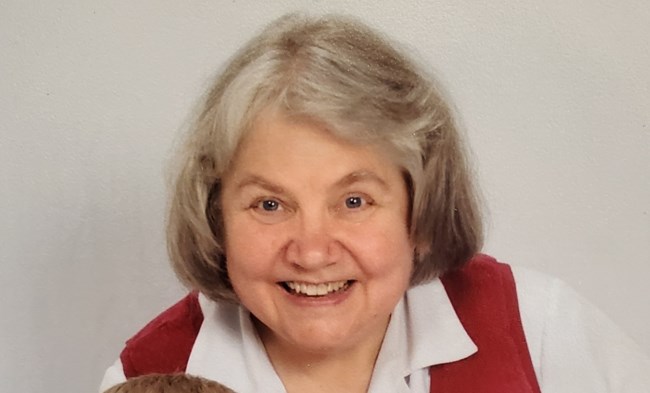
Kristine Robertson, 73, passed away on May 13, 2020, at her home with her children by her side.
View obituary and share memories at http://www.grfuneralhomes.com
View obituary and share memories at http://www.grfuneralhomes.com
Look at all the shadows falling over the Spruce Tunnel pathway. Aren’t they lovely?

A VERY ANGRY RANT –

Generally I show a bull stomping me down, as metaphor for my disease . . . I’m grateful to be home from the hospital, of course, but the pain has ramped up – unimaginably – so that’s why I haven’t felt like writing here for a while. (Part of it is my fault – I’m so reluctant to take all the pain pills I’m allowed . . . so it gets away from me sometimes all the time.)
It doesn’t feel like a “small” bull hoof, it’s more like a bull elephant’s hoof. That’s me under the heavy foot.
Nevertheless, I’ve been passing my time distracting myself with sometimes lovely streaming shows – Anne of Green Gables, Longmire . . . And I watch the daily press briefings from the White House – which are fine as long as you don’t watch the news about them afterwards. Such lying!
And it’s making me angrier than I’ve ever been!
You may have heard of Lansing Michigan’s demonstration against constitutional violations by the governor. That has a lot of people worked up. To demonstrate or not to demonstrate — I can see both sides of the issue.
But to lie or not to lie – there is only one side in a civilized society. Demonstrations may not concern you directly – but a viciously lying media does, and the consequences will be out of our control, I’m afraid.
People in Michigan were told so many inflammatory lies about the demonstration that I had to check the photos, the videos, and even with people who took part. Here’s one big LIE: The vehicles taking part in the demonstration prevented ambulances from getting into the downtown hospital. Ooooh — how terrible! Lives could have been lost. Don’t those people care?
But it was a lie – no ambulance movements were impeded; no ambulances were prevented from entering hospitals. No ambulances were even held up for a little while.
But all afternoon, that’s what the entertainment-news media reported. Finally, early afternoon, the hospital involved had to issue a report saying that NO AMBULANCES are being prevented from getting into the hospital. That wasn’t good enough. that public statement contradicted what the media wanted you to think.
The hospital issued three more similar reports throughout the day – NO AMBULANCE WAS PREVENTED FROM ENTERING THE HOSPITAL DURING THE DEMONSTRATION!!!
However for a week afterwards, only the entertainment-news media inflammatory BIG LIE was broadcast over TV and radio. A friend today visited – and she had NEVER heard what the hospital reported. How many people believe that the demonstrators are so thoughtless and careless that ambulances couldn’t do their work that day? Many, I’m sure. What a terrible thing it is to demonstrate against the Authorities.
_____________________________________
CAN YOU READ? CAN YOU READ????
Today’s BIG LIE is what got me moving – on into the Spruce Tunnel. The lie is that President Trump has told people in yesterday’s press briefing to inject themselves with disinfectant! Oh, for goodness’ sakes – I heard that in the middle of the night when I was half asleep – but no, when I woke up, apparently the entertainment-news media are still falling all over themselves with this BIG LIE.
This LIE repeated all day long led me to re-view that press conference, several times, and to read the exact transcript of the president’s words. In no place does President Trump tell people they ought to inject themselves with disinfectant – leading a gullible Lysol corporation to plead with people to not inject Lysol into themselves.
Because – because – the media repeated this lie all day long, people are believing that that’s what Trump said – So who is really putting that idea into the minds of people? How many people will think no further than that media lie – and maybe try it themselves?
Media lies are responsible for dangerous behavior.
But can you read? At least read the transcript? Search out what truly happened, hopefully without TDS,
_______________________________________
Transcript:
For those who like to read stuff, here is a transcript of what the President actually said:
So, I’m going to ask Bill a question that probably some of you are thinking of if you’re totally into that world, which I find to be very interesting. So, supposing when we hit the body with a tremendous, whether it’s ultraviolet or just very powerful light, and I think you said that hasn’t been checked, but you’re going to test it. And then I said supposing you brought the light inside the body, which you can do either through the skin or in some other way. And I think you said you’re going to test that too. Sounds interesting. And then I see the disinfectant, where it knocks it out in a minute, one minute. And is there a way we can do something like that by injection inside or almost a cleaning? Because you see it gets in the lungs and it does a tremendous number on the lungs, so it’d be interesting to check that, so that you’re going to have to use medical doctors with, but it sounds interesting to me. So, we’ll see, but the whole concept of the light, the way it kills it in one minute. That’s pretty powerful.
He is looking at the doctors as he asks these questions, almost intending that they overhear him . . . and go off the deep end.
Yeah, I’d bait a hostile media too!
(Only God determines the number of our days.)
Thank you, every family, friend, and reader for your prayers – I think they “did something.”

I am out of the hospital now, suspended between “immediate” (death) and “sudden” (death.) In other words, I’m out of “immediate” danger, but the nature of my illness still makes “sudden” a possibility.
And yet, the more days that pass for me, the less I think of “sudden.”
I’m regaining strength, and even nicer, I’m regaining my interest in the things around me. I’m even regaining my desire to communicate, so I shall probably be blogging again. I’ve been observing much . . . and words are bursting out of me. . .
. . . As well as gratitude. And surprise. And lots of love.
See you later today!
Deo gratias!

This may or may not be my last entry. We don’t get to decide that. And it will take my remaining strength today to write this.
So, of secondary importance is to say Happy Easter to all of you. I shall either just celebrate the resurrection of mankind’s savior; or I’ll meet Him today or pretty soon.
Because of that, I can assure you that of primary importance is that the crucifixion, death, and resurrection is real….the movie, The Passion of the Christ – it had to be that way to accomplish our salvation –
God knew ahead of time. God called Abraham so his descendants could receive, retain the knowledge of God. They were Chosen for this, as well as to be the conduit through which God, the Second Person of the Triune God, enters earth –
– thru the means of a specially created human being, Mary, fully human, giving birth to her savior; specially preserved holy, though, so she could contain the holy God. the living Messiah. (see the ark of the covenant, — many predictions and foreshadowings of her too; at the Cross she was given to us to be our mother. )
Jesus is born, divine and human – to show us God, but also to be able to make acceptable atonement for our sins against an eternal, infinitely holy God. It worked. (Only God is big enough to atone for our sins.)
That’s what I want you to know. Our short lives here are as nothing compared to our existence in all of eternity. Our lives are an eyeblink – then we meet our creator.
A creator who created us out of love, but will not force us to come to Him.
Then what, after that first Easter? Jesus set up His Church to carry out that message. It’s been opposed, persecuted, lied about, substitutes put in, but the original Church is still there, to give us baptism, confirmation, Holy Communion that is ongoing with Jesus, and the other sacraments… of which Last Rites is coming up for me soon. Soon enough, I hope.
Get into the Church. (Probably shouldn’t be the New Version, since the 1960s – this dying woman is certain of that now.) Get into the Church, learn what She teaches, stay faithful to Christ. Hope. Trust. Love. Pray . . . .
About this Church in the present time – sin and sinful men have entered it – as predicted. The Church is still there – don’t be one of the bad guys in the Church. Your relationship with Jesus is what counts, not church membership.
Heed Pascal’s Wager; it’s a better life to believe.
If these are the End Times, life ought to get very interesting pretty soon. But first the Enemy of God needs control over you: surveillance, laws and rules to follow, forced acceptance of the New World Order, persecution of those who don’t want to break God’s laws…..
All predicted.
We have only the One Hope. This world was not meant to last forever.
The set-up for this New World Order is accomplished through fear. Fear. Fear of War, maybe. Fear of the worldwide pandemic. Fear of being accused of being a danger to society. Fear of running out of money and food. Fear of having your apple cart upset. They’ll think of something.
But: John 4:4 – Greater is He that is in you than he that is in the world.
God is Good because God is Love. Love is diffusive of itself – it wants to share.
Love to all my family and friends and readers.
>>>>>>>>>>>>>>>>>>>>>>>>>>>>>>>>>>>>>>>>>>>>>>>>>>>>>>
Gosh – is that it? Is that all I need to say?
There is still such a thing as Miracles. Prayer. A reprieve. St. Jude. St, Charbel. St. Rita.
_______________________________________________________
Maybe before I empty my computer, I want to show you one more thing:
Satan is tricky… hints of him can be found everywhere: The New Version of the Church is his latest most successful trick:
Symbol of Satan on the right…
Here’s a new audience hall for the pope –

The new hall from above, with scaly roof:

An unknown vatican room ;

So many ugly statues, twisted crucifixes, tortured metallic representations of Christ…There is a big battle coming.
calling ambulance now – going to hospital
maybe good-bye
pray for me
ME.
I’m the “controversial observer.” I’m a lifelong observer, but I’m an amateur at these things I’m observing – as are you, I expect. So let’s none of us be too opinionated. As I’ve written before, my favorite line from a very favorite book is this:
There’s nothing like an idea to blind the eyes of a wise man.
Or as the popular American aphorism goes:
To the man with a hammer, everything looks like a nail.
Okay? So I’m not preaching Gospel here, just observations.
__________________________________________________________________________
It’s pretty hard to find much actual news around here, not on TV, not on the Internet, a little bit on various radio sources . . . but since late January when the Corona virus was a little blip on the edge of my radar screen to February and March reporting, it’s been pretty much 24/7 corona virus talk around here, in my home, on the “airwaves.”
Every source. Every development. I like science, and I like medical issues.
But from the very beginning there was at the back of my mind this constant caveat: “Wait. Something doesn’t add up.” If they’re saying this, why that” If they’re doing this, why? Where’s the follow-up on that story?
To prove to us that this is truly a pandemic, we are constantly shown graphs of virus victims that go upwards drastically in a J-Curve. And we are shown maps like this several weeks ago:

The number of cases for each country duly placed into the little boxes.
But again, in the back of my mind, I’m thinking – Wait… these numbers are far far less than the number of seasonal flu cases for this time for each country. But — they’re the experts, maybe they’re seeing something the ordinary person does not see.
Daily , every day, we are getting alarming statistics – at least we’re told they’re alarming.
And then comes GIGO: Garbage In Garbage Out. this is the warning that was given to students of computer sciences to warn them to be careful not to have preconceived conclusions work their way into the computer program, via your own input.

Observing this chart, I ask further: How was this chart constructed? What are the intervals for each bar on the graph? If you changed the size of the intervals, then how would the bar graph look?
Where did the numbers come from? We are now hearing that people who have died of other problems but with the virus, (not because of) are being included in death-by-virus numbers.
“New York City can’t keep up with disposing of the dead bodies!!!!!” the headlines screamed for a few days on end. Then we are shown photos of this:

Those are reefers lined up alongside a big New York City hospital. Reefers are refrigerated tractor trailers. Big trucks. Inside?

Body bags lined up inside the trucks. Scary to me too. These photos have their effect.
The pictures are true, but what about the use they are being put to? The mayor of New York City says there are fewer corona virus cases and fewer deaths than expected. Not all reefer trucks have been utilized. Not all the new hospitals hastily built, including the temporary one in Central Park, are being filled. He and now the medical experts are downsizing the amount of projected cases and deaths.
All over the world, the new statistics (and projections) match the seasonal flu, and sometimes doesn’t even reach seasonal flu deaths. Erroneous computer modeling has led us to false conclusions, upon which unprecedented measures have been imposed on the world.
This is just a small sample of the questions that I had.
The measures taken by governments around the world, just didn’t match the numbers – unless they wanted to gin up the fear, and coincidentally the compliance, It’s been a successful public information campaign. Government power is developing and increasing.
So only one more question: IS THIS A CLOWARD AND PIVENS EXERCISE OF “NEVER LET A GOOD CRISIS GO TO WASTE” ???
(Please please please know who those two people are, Cloward and Pivens)
Then one more “observation: I see democratic governments, even socialist democratic governments all over the world exercising authoritarian, dictatorial powers. Our good governments are being encouraged to “try their wings” flying us into a World Wide dictatorship.
With this development accompanied by the Roman pope putting aside his historical titles and influence – the New World Order pope – we are rapidly being steered into that Brave New World.
That’s the desired outcome. This latest worldwide “danger” is the justification.
GIGO.
No, not a lamb for a pet . . . This –

This week is Holy Week, when we remember the events leading up to Jesus’ sacrificial death on the Cross. The God of Abraham, Isaac, and Jacob conveyed to Moses just how He wants to be approached – through atonement for sins by sacrifice, and then worthy praise and worship. More than a thousand years later, the religious leaders of the Israelites, the Pharisees, often showed signs of missing the point.
They didn’t seem to understand that they were indeed the Chosen Race, but chosen in order to retain the knowledge of God and right worship for the sake of the rest of the world.
On Palm Sunday, many Israelites welcomed Jesus into Jerusalem as their King. On Monday and Tuesday of Holy Week Jesus presents Himself to the public, exposing Himself to the growing wrath of the Pharisees.
But we also observe that Jesus presents Himself to the Gentiles, too – implying His coming sacrifice is for the whole world, Jews and Gentiles alike. This was indicated by the visit of a group of Greeks, representing the highest, most developed thinking of the civilized world.
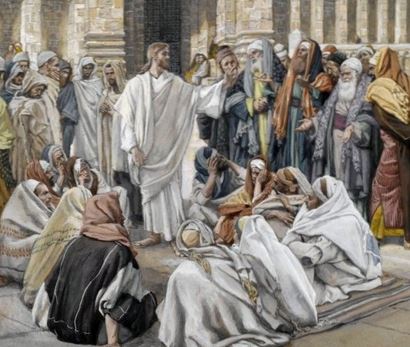
We still study their words and wisdom today. (Everyone studied their works, up until a few decades ago. ) And during this Holy Week of two thousand years ago, they came to Jesus, seeking His wisdom.
So Jesus presents Himself to all the world – not only to teach, one last time, but also to present Himself for our Scrutiny. This is what Jesus is like, all you Israelites; this is what Jesus is like, all you Gentiles. This is Who Jesus is….
Choose Him?
This is also the week that the Israelites must choose the lamb they want to buy to make their mandatory sacrifice at the time of Passover. Then the family’s little lamb will live with them for a few days, allowing the family and the lamb to become acquainted with each other. Then, soon, the little lamb will be brought to the priests where it will be examined carefully, because any spot or blemish or scar disqualifies the little lamb from being the Perfect Sacrifice.
So this is not a week merely for planning Easter dinner or Easter clothes — it’s a time for making a choice, becoming better acquainted with your “choice”; being sure.
A great Sacrifice is coming.
Dumb: adjective: a medical condition in which a person is physically unable to speak; his vocal cords may or may not be able to make sounds, but he is unable to produce meaningful speech. Often the condition is accompanied by deafness.
Dumb: adjective: a psychological inability to speak, usually after severe trauma
Those who are born dumb have the same intelligence ranges as people who can speak. They are our family and friends.
________________________________________________
A Noisy Day
Today, in this day of corona-virus restrictions, the year 2020 brings us a Palmless Palm Sunday. Most Christians will not even attend a church in order to celebrate this day.
But the day we celebrate still happened!
 An antecedent for this day occurred about 2,900 years ago, just after the great King David died, and his kingdom could have come to and end. But God had raised up Solomon to be the next king, to the people’s great rejoicing. When King Solomon rode into Jerusalem to present himself as king, he rode on the back of a royal donkey.
This was a foreshadowing of the King that was to come, fulfilling everything that had been written in Scriptures about Him.
Nearly 2,000 years ago, Jesus also rode into Jerusalem on the back of a donkey, a donkey specifically chosen under unusual circumstances. He rode through crowds of people in Jerusalem who had gathered to see Him, and then they began to receive Him as their new king indeed, with cheers and yells of acceptance and joy!
We are not at all different from those people who lived so many years ago in Jerusalem. Some of them became part of the crowd that were celebrating this Man — but many others held back, from ignorance, from arrogance, from doubts, from fear.
Fear of the authorities who did not want a King over them. They themselves would be dethroned from their positions by Jesus! And so they came up to Jesus and said “Your disciples are making a public nuisance of themselves! Make them be quieter. Make them be quiet!”
” They’re disturbing the peace (our peace).”
 (Think you can stop a cheering crowd at the Super Bowl when they are rejoicing that their team has won?) The cosmic meaning of human beings accepting Jesus Christ as King is a great force, like that, even more than a happy, noisy Super Bowl crowd.
So Jesus answered these authorities and said, “If I make these people be silent, then the very rocks will cry out. . . !

The Quantum Continuum
Anyone believe that dumb rocks could begin to make noise? There are the Singing Sands of the Sahara Desert, a phenomena humans know about but few have ever gone there to witness.

Elsewhere there are rock formations which seem to sing out as the wind passes through them.
But this is not what Jesus is referring to. No, quantum physics enters here. That’s the structure of the natural world that creates both physical and non-physical reality.
Reality. It’s not just what we can see or experience. It’s what is. Created by the God Who is – (I AM) – when He said the Word: Let there be Light – Fiat Lux – He did not mean let there now be light that humans can see with eyes.

a quantum pre-material photon
Fiat Lux refers to the entire electromagnetic spectrum of Energy, frequencies down to the smallest vibration, and when the vibrating stops, we call it “matter” – frozen light. Then from this “matter” the material world was formed. In a sense, a quantum sense, all matter has a place on the electro-magnetic spectrum, which we clumsily call “Light.”

photons joined, on a continuum
A Disturbance in the Force
A disturbance “in the Force” will have (quantum) significance elsewhere, apologies to Obi Wan Kenobi. He was not far from discovering the Truth which is the Author of that Force.
Dumb Rocks? The apprehension by humans that Jesus is King was of such spiritual significance that if you suppress it in one place, it will manifest in another. “Quantum entanglement.”
One day, after this life, that will be a commonplace idea. “The Heavens declare the glory of God,” King David had cried out as he glimpsed this truth.
Or as St. Paul says: All creation is groaning, waiting for their time of Redemption. The “heavens,” the”earth,” “dumb rocks” are all part of Creation which have the ability to express pain or cry out in joy: Jesus Christ is Lord!
Suppressing the name of Jesus:
Those same rejecting “authorities’ are still with us today. When Peter and John preached to Jerusalem about Jesus, the authorities had them arrested, and then commanded them: Well, okay, you can preach, but don’t use that Name!
But they did. They were arrested again, and the authorities were harsher this time – We told you not to speak in “that” Name. They could not even say the name Jesus; they beat the disciples instead.

But “that” Name has not been suppressed. It cannot be. Maybe one day humans will join the rocks – and all creation- in praising that Name.
An eternal Palm Sunday!

Think I’ll trade in that “bull” and put St. Jude in its place. Some nice things are happening. A little bit.
__________________________________________________
I’ve had roller coasters on my mind for about a week now. I woke up one morning thinking about my childhood – a fairly happy one in Illinois – and one memory led to another until finally I was flying downhill strapped into a little car on a roller coaster!
I just L O V E roller coasters! Never met one I didn’t like. Whenever I’d go to an amusement park, as a child or as an adult, the roller coaster was the– well, the second place I’d head to!
(Ferris Wheel is always my first stop — Double Ferris wheel, if possible. When I travel out West, I’ve been known to come to a sudden stop on an Interstate when I see a Ferris wheel in the distance. Daytona Beach? Means Ferris wheel to me!)

But roller coasters! So many kinds! Plain old roller coaster like the one above — Or the Upside Down Roller Coaster like this —

Or the Corkscrew! —

Funny thing about the Upside Down and the Corkscrew – you don’t really perceive that you’re upside down. Not really. It’s all about physics: the G forces and the centrifugal forces keep you oriented to up and down, to your up and down. So don’t expect a wondrously strange experience; it’s just you, going fast, driven down hard into your seat.
(Even the Stand-Up Upside Down roller coaster doesn’t feel too different.)
On the other hand, I did have a “strange ” experience on a Corkscrew one time. I got on board wearing my sunglasses on a bright hot sweaty day in the amusement park. I know you should stow those sunglasses and any other “loose objects” – like your false teeth – ha ha.
We picked up speed and went round and round and round, and somewhere on a round my sunglasses began slipping down my nose. I moved my arm up to my glasses to push them back on – completely forgetting centrifugal forces which went this way and that way on the corkscrew. I watched my (now loose) arm flop up and down uncontrollably and twice smacked myself hard in the face! The second time broke my sunglasses.
 No one in control of himself would smack himself in the face that hard — hah! but the whole idea is to be out of control! I had a good laugh at myself . . . the rest of that bright sunny day – hmmmph.
But one of these will feel very interesting:

On this one, your legs are dangling free. That feels different, like there’s nothing between you and the ground rushing up at you. It’s fun because you have no more control over your legs than I had over my loose arm.
Now, later in the day and the next few days, my mind added a more serious thought to all those roller coasters. One thought leads to another, right?
Again, thinking of my younger years, I remember how fast and “out of control” those times were, like being on a roller coaster. The Sixties were just about forming, and then they were on us, and then the devastation caused by the Sixties was upon us, ripping families apart, ruining health with drugs and STDs, losing our plans for a secure future, stuffing down those feelings of shame as we knew deep down we were violating every healthy normal activity which would have given us pride and self-respect.
It was as though we all came to a screeching halt. As though our whole wild, fast, fun ride ended in one big crash.
Sort of like this . . . picture in picture:

At the bottom of a thrilling hill, there waited for us one big destructive crash. What did the crash feel like? The hyperactivity of the disco ’70s. Muscling our way ahead with greed and ambition in the ’80s. The depression, suicide, mental illness, drug addiction, sadness and perplexities of the decades after that. And always, betrayal of friends, divorce, abortion, the disappearance of loyalty and community . . . and now the sense that the future is out of our control.
I thought and thought about how all these things seemed similar. I looked for one “cause” that they all might have in common. It didn’t take long. I was there and observed it all, sometimes participated, just a little. I watched all those decades.
Too much else was offered as exciting substitutes that distracted us from serious, adult, “grown-up” thinking. Everything became a party. Even going to college! Everything became as exciting as slowly going up that roller coaster hill, knowing that the crest is coming – and we’ll go whooshing down the hill, out of control, no time to think about anything else. And we didn’t want to.
I’m going to cut this short: The Cause I observed? We gave up God and our entire society crashed.
At the time, I didn’t know the Origin, but I watched the Cause. One by one, nearly all my friends and contemporaries gave up their religious belief. They changed from respect for religion and its importance to a healthy society . . . to mockery. Finding hypocrisy everywhere they could justified their rejection of God. Even the churches changed.
Time Magazine’s cover page screamed out Bishop John A.T. Robinson’s cry of the new age: ” God is Dead!” God became irrelevant. The Lord of This World had won.
So it seemed.
I still love roller coasters. I love the speed. I love the dare. But I won’t lose my mind or let go of my faith. It’s roller coasters that are fun — not Life itself.
 Sorry for such a long pause while I “fight my bull.” At least it’s not bucking and kicking anymore…. It’s still there, and I’m tired, but this is a Sunday! I’m going to ignore him. I’ve missed so many good holidays and feast days and celebrations as time marches through the Liturgical Year.

This is the season of Lent, as you know. It’s a dark time of introspection, sorrow for sin, acts of penance, extra almsgiving, and fasting. The liturgical color is purple, and this is the reason:
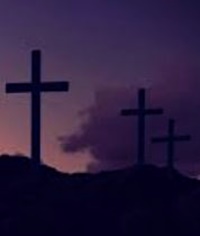
It really happened, that day; it’s the supreme act of Sacrifice for our sins, adequate and accepted by our Creator. Christ died; we live. We remember and try to participate in, from our point in history, all the acts that make up this act of Supreme Sacrifice.
The Church celebrates this day as Passion Sunday. (Some of you in the New Version of the Church might be a little confused because . . . well, they move this title around a little bit and sometimes they ignore it altogether.)
But people are people, no mater what century we live in. Just as the the Church gets us psychologically ready for the slide down into Lent with the lessons on Septuagesima, Sexagesima, and Quinquagesima Sundays, so are we now into another “slide” (downward) into the seriousness of Good Friday. We don’t want to wake up one day and all of a sudden it’s Good Friday; we slide into it, prepare our hearts for it.
The actual passion of Christ is coming ever nearer.
We do something on Passion Sunday:

We do it, we veil the crosses in our churches, as well as other visible reminders of our faith. Our priests wear purple, as does the altar.

So why? Just a quaint custom fossilized in tradition?
No, it comes from the particular Gospel that is appointed to be read on this day. This Gospel tells the story of Jesus confronting the Pharisees in Jerusalem just a couple weeks before His Crucifixion. They questioned Him, pointedly, revealing their hostility and stubborn disbelief. They said, “We’re children of Abraham; we know better than You!”
Then Jesus “cooked His own goose,” as they say sometimes. He answered them: Before Abraham was, I AM.”
That’s it – that was enough proof for them! Jesus had just publicly spoke the worst blasphemy. He told them He is the great I AM, God-Most-High. And the penalty is Death – by stoning.

But there is a problem with death by stoning. Yes, you die, but you don’t necessarily lose a lot of blood. A sacrifice involves “shedding of blood,” a lot of blood, and in this case, the Blood of Jesus must pour out from Him as He gives up His life for us.
(If you’re a respecter of the Bible, there is a verse that says: Without the shedding of Blood, there is no remission of sins.” Blood must pour out from the victim.)
So Jesus could not die by being stoned. Then how did He escape the wrath of the determined Pharisees that day, after they had already picked up stones? In our Reading of the Gospel, we hear: “But Jesus hid Himself and went out of the Temple.”
“Hid himself”? When all had their eyes on Him? I don’t know how He did that. No one knows how He did that. But He was not slated for death by stoning.
 So to remember this mystery, we also “hide” or veil our reminders of Jesus in our church buildings and sometimes in our own homes. He is precious. He is a great value. His crucifixion is that “great value: for us to come.
We veil things that are of great value and are protected from profane view and inappropriate view.
Purple. It’s all about Death, isn’t it. Today we seem to hear about Death all the time, in the constant stories about this strange new virus. Everyone is at immediate risk. Who will die next? Death is never good, never easy, this separation of our soul from our body.
One day the veil will be totally removed for us. “And I, if I be lifted up (on the Cross) will draw all men to myself.”
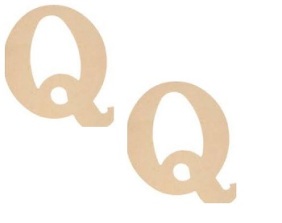
I have two wooden letter Q’s on the wall above my computer. They stand for “quicumque.” Latin, for whosoever – whosoever will . . . .
Whosoever will come . . . .to the Cross.
I’m going to have to have March 25th tomorrow. I hope.
Shoot! Or maybe Chute – the bull is back. Some of you who have been here six or seven or eight or nine or ten posts ago, know that I’ve used bull riding as a metaphor for the disease I’m fighting……
Out of the chute, straight at the bull rider, a job I didn’t want.

The bull decided to turn around and make another pass at me.

It’s a darn bumpy ride.

I’m doing all the things I know how to do, when I can do them. Sometimes I know better but can’t quite do everything I’m supposed to do to get better.

Give me a moment . . . .
I have March 25th to write about and rollercoasters to write about and two lessons to prepare for mailing out…. I’ve not forgotten.
 If any of you are on speaking terms with St. Jude,
please put in a good word for me.
Sometimes it’s hard to speak for myself.
(I have rollercoasters on my mind; they make a wonderful analogy! But first, this post, a kind of sermon, which will make sense of the analogy.)
__________________________________
IS THIS THE SIGN OF THE END?
That is, is this corona virus a pestilence that is a sign that we are in the End Times? Is the antichrist upon us?
“Signs” are important to us. If we pay attention to them, we have a better chance to make the right decisions. We need signs!
“God, if you’re up there, give me a sign!”

And God gives us many.
___________________________
Is this corona virus a worldwide pestilence that is a spiritual sign for us? Well, I know that it’s bigger than we are; we don’t know how to defeat it. Even if we find a “cure” and a “vaccine,” scientists tell us that it will always be with us now, waiting to strike again once we relax all our sanitizing and self-isolation. It’s doubtful a vaccine will be completely safe, and we’re not going to vaccinate 7 1/2 billion people anyway.

The disease is “bigger” than we are. The pestilence could very well be supernatural, a judgment on the world meant to be a spiritual wake-up call. Maybe. Maybe not.
I think I can answer Yes to that second question, is the antichrist upon us. Something we should consider:

Notice the claw-like un-human hands. It is apparent that the whole world is in his grip:

With apologies to Tennessee Ernie Ford, Pat Boone, and all the other singers who put this American folk song on the Top 40 charts not too long ago, I think the lyrics take on a different meaning today.
A Parable:
Believe it or not, Jesus gave us a lesson on how to rob a house! The lesson was repeated in three Gospels, Matthew, Mark, and Luke, so I think it’s something He wanted us to know.
“No man can enter into a strong man’s house, and spoil his goods, except he will first bind the strong man; and then he will spoil his house.”
Who’s who here? Well, something valuable is in a “house” and Someone wants to take it away from the “strong man” who owns the “house.”
The “house” is the world.
We humans, all Mankind, is what is of value.
Jesus Christ is the “man” who wants to take the valuable thing. He came into the world, “not to condemn the world but to save the world…” (John 3:17)
Now, what “strong man” owns the house? It is God’s Enemy, whom we can call Satan. The whole world is in his hands.
How is this strong man “bound”? By Christ’s sacrifice, death, and resurrection Satan’s power was ended; he was defeated; he was tied up; his power was “bound.”
Only we don’t know this anymore; we don’t listen. We, as a “world” in general, don’t hold on to Christ, but the opposite, the spirit of antichrist. Either deny Jesus ever existed, or deny Jesus is the Son of God, both are described as the “spirit” of antichrist.
According to the Apostle John, many antichrists have gone out into the world, leading up to the final, undeniable embodiment of the Antichrist.
 Few will recognize him for what he is though. His ways will seem so familiar to us: Crime, poverty, disease, injustice, violence, selfishness, cheating and lying, infidelity, impiety, murder, abortion, warfare . . .
So is the final Antichrist near? It seems the grip of the spirit of this Antichrist is getting tighter and tighter.
Villain – noun: someone who behaves in an immoral or socially irresponsible way; someone who is responsible for a bad situation; “a bad guy”
_____________________________

“Good Beach”
Around the world, the governments of all the countries are awakening more and more to the necessity for extreme measures to stop the spread of the coronavirus. Those who are slow to impose “lockdowns,” shelter-in-place orders, or stay-at-home measures, are seeing exponential rises in their case numbers and deaths. This new virus has proven to be far more infectious than first thought.

“Bad Pub”
Now that we see a rapid rise in the number of virus victims among the 20-40 year olds, these measures are being extended generally through the whole population. One British health minister said this today: Life should not feel normal. If your life seems normal to you, you must ask yourself if you are following all the rules to keep society, the hospitals, and your loved ones safe.

Young Victim
A list of our new villains is becoming apparent as we listen to reliable news sources. This is only a partial list. You will have your own ideas of who should be on the list of villains as you pay attention to the latest developments.
Here are just a few government-sponsored news sources that I regularly check out – and there are more – that seem thorough and somewhat trustworthy: SkyNews, DeutscheWelle, and ABC News-Australia.
That is NOT the American “ABC” which is notoriously biased, agenda driven, and, along with these others . . .

. . . should be shunned and publicly criticized (or shamed). These American news sources have one theme: every “news” story must promote the agenda that Trump is Bad; Trump is Incompetent; Trump is (now) Dangerous etc. They’ve got to work that in somehow to each of their “interviews.”
Unfortunately, since there are only a very few (six maybe) sources of information in the whole world, this agenda has infected nearly all media, worldwide.
(There are some good American news outlets, but I won’t list them just yet.)
_________________________________________
Villains:
Perhaps those entertainment-news sources that should be shunned should be included in today’s new villains. Although that seems obvious.
 According to a Scottish news source today, people who are hoarding food, buying many times more food supplies than what they need, are today’s villains. They are emptying grocery stores, for instance, and interrupting an already stressed supply chain that is needed for the rest of the public.
It goes without saying that those who try to sell their extra supplies at a profit are supervillains, criminally liable.
In America we are told not to ask for coronavirus testing if we are well and not in a high-risk group. This uses up PPE supplies, testing equipment, and personnel that sick people need.
Villains also are those , we will soon see, who refuse to stay home, except for the most necessary errands. There are a dwindling number of attendees at wedding receptions, funerals, church gatherings – and that’s good – but a not-fast-enough dwindling number of beach goers, pub crawlers, pizza party participants, private social gatherings….
Teenagers are notoriously gregarious. And now they don’t have to go to school!

Gregarious Gamers
It’s hard to believe that we must not socialize with anyone outside of our own immediate family members who live in our own same home! Surely a short visit from a trusted family member does not make him a villain! It’s Mother’s Day (in the UK today – and soon Canada, the US, and other countries) and surely a short quick visit or hug is not a dangerous thing!
People who don’t keep their social distance away from others become villainous spreaders of the disease. It’s not immediate and obvious, but such people who shake hands, hug, even do the “elbow bump” can quickly become carriers who then eventually spread the disease.
People who are lax about frequent hand-washing are engaging in dangerous, anti-social behavior, even in your own home.
Do you plan to get a haircut in the near future? Have your hair done? Get a massage for some stress relief? Get your teeth cleaned? See your doctor for a “routine” checkup? Pick up some new clothes? Quickly we are seeing this as anti-social behavior.
Here again: Life should not feel normal. If your life seems normal to you, you must ask yourself if you are following all the rules to keep society, the hospitals, and your loved ones safe.
Villainous behavior is a MENTAL attitude. It gives yourself permission to do what you think you need to do.
But so is socially responsible behaviors such as strict physical self-isolation. It’s MENTAL attitude that modifies our behavior.
We are perhaps more fortunate than previous generations. I can’t imagine what this would feel like before our digital age. We can all do many “normal” things in cyberspace: Socializing. Checking up on other people. Playing games. Reading. Studying Gaining new skills. Learning to know God better. (Will you meet Him soon?) Exploring the world. Official business transactions. Ordering necessary foods and medicines and other goods online.
Personally, I’m looking forward to a few good Virtual Vacations! All around the world!

And especially here:

Think I’ll ever be well enough to get to a Dude Ranch?
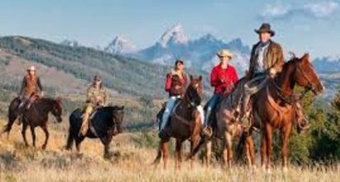
I have time for it now!!!!!!
In this most dire, dangerous of times, we still have much to be thankful for.
.
.

Pestilence, Famine, War, Death
A Spiritual Interpretation
_________________________________________________________
Pestilence – noun: a worldwide deadly disease; plague
Plague – noun: a worldwide deadly disease; pestilence
Pandemic – noun: a worldwide deadly disease; see plague, pestilence
No matter what century you live in, there is a word for it! That shows that this is a recurring human phenomenon.
We are not the only people who have ever asked questions about the reason. In the last post I put forth some reasonable questions. In thinking about those questions, underlying them all is the uneasy sense of “What did we do wrong (to deserve this)?”
There are some proud and hard hearts who will tell themselves they don’t think that way – but history has shown that people in general do ask that; there is that nagging, sometimes unspoken feeling that, yeah, this is a spiritual matter, we deserve this – not each individual, but humanity as a whole. Exempt yourself, if you will; but it’s still happening, this current plague or pestilence.
I have so much material to write, but I will try to keep it focused down to one-tenth of what could be said.
So what have we historically done when faced with periodic pestilences?
Feeling somehow at fault, societies have always propitiated their gods; and the descendants of Noah, descendants of Abraham, have appealed to God-Most-High. Just as a matter of factual history, the appeals and propitiations have taken the form of acknowledging guilt, sorrow for sin, public penitence, penance, prayers and fasting; sometimes “sackcloth, ashes,” and bare feet — and always sacrifices.
Although I count the rise of modern man from about 10,500 B.C., I’ll just skim across fairly recent history. That would be after the rise of Christianity, those descendants of Abraham by faith or by birth, all who acknowledge Jesus as Messiah (who is the “Light to enlighten the Gentiles”):
At the end of the third century, and reaching a critical point in 302 A.D. was a terrible recorded plague in the Roman Empire. It was followed by famine, a common consequence of plague because there are not enough people left to grow or transport food. Both pagans and Christians supplicated their gods/God.
In the fourth and fifth centuries, as the Roman Empire decayed and fell, there was a succession of plagues brought on by warfare, famine, and foreign invaders. Christian writers in that day frequently point the finger at the rise of Arianism, a heresy that denied the divinity of Christ, and led ultimately to the weakness of Christian doctrine in North Africa and the Middle East, including Arabia.
(An interesting consequence of this heresy is that these are the very same regions that succumbed to the armies of followers of the Arab desert crescent moon-god . . . .those followers still in existence today.)
There was another terrible plague that struck Christian regions, especially the city of Rome, during the time of Pope Gregory the Great, which is 590 – 603 A.D. Here we have a detailed account of what was done to end the plague.

Gregory organized a massive procession around the city, inviting everyone to pray to God that the plague would be lifted. At the head of the procession was held high a portrait of the Virgin Mary, believed to have been painted by St. Luke.
As this procession moved through the city, eyewitnesses say that the air seemed to grow clearer and more “serene.” Some reported to hear angelic voices above, singing this familiar song of praise:
Regina coeli laetare, alleluia,
Quia quem meruisti portare, alleluia,
Resurrexit sicut dixit, alleluia!
Some of you will recognize this sung during the weeks following Easter, the celebration of Christ’s resurrection. Pope Gregory added the words: Ora pro nobis, Deum rogamus, alleluia!
According to history, then:
Then the pope saw an angel of the Lord standing atop the castle of Crescentius, wiping a bloody sword and sheathing it. Gregory understood that that put an end to the plague, as, indeed, happened. Thereafter the castle was called the Castle of the Holy Angel.

You can visit that “castle” there today.
This most famous episode in Christian history became the model for turning to God in a time of pestilence, and gives Christians hope that God will have mercy, and hear.
Today, we are still exhorted to go prayerfully to God, confess guilt, to do penance, to change our ways, to fast, to supplicate for the end of the disease, to intercede for others . . . . I have read of several public processions (mostly in Europe) and many calls to prayer – a day of prayer set aside, here and there.
Exhortations to read and meditate on times past when God’s anger has been aroused and He has allowed plagues (and wars and famines and natural disasters) to happen as a way of calling people back to Him. (Read Old Testament stories of Noah, Judith, King David, the people of Israel at times.)
We today are exhorted to also read the Seven Penitential Psalms.
We are exhorted to meditate our way through the Gospel, point by point, in a prayer commonly called the Rosary.
We are exhorted to meditate our way through the last hours of Jesus’ life – in a series of meditations called The Stations of the Cross.
Public prayer, private prayer – we are exhorted to do something!
And what about sacrifice? As I wrote above, .”…the appeals and propitiations have taken the form of acknowledging guilt, sorrow for sin, public penitence, penance, prayers and fasting; sometimes “sackcloth, ashes,” and bare feet — and always sacrifices….”
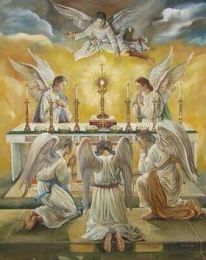 Jesus came to be the one Sacrifice for us, for all of humanity, and us as individuals. But Jesus is Eternal God, the Second Person of the Trinity – His Sacrifice is eternal and eternally touches every minute of “time.” We are not meant to “remember” once a month or twice a year or once a year in a kind of imitation; The “Last Supper: occurred from evening to evening – and encompasses the Crucifixion, as well as His own explanation – I am giving my Body and Blood for you: Take, eat; take, drink.
This is what occurs at every Holy. Sacrifice. Of. The. Mass. Catholics tend to take the Bible literally, and to participate in the Mass is to offer the Eternal Sacrifice of Christ to God the Father.
There you are.
You can do things to take care of our present-day pestilence.
Ora pro nobis.
“Why this go happen?”
An important and worthy question in this time of the current pestilence we know as the corona virus. Everyone has a right to make comments. Everyone has a right to ask questions – even people for whom English is not their first language. “Why this go happen,” asks the question perfectly.
I came across this question in a comm box recently, following an article on the advance of the corona virus. Two things struck me right away:
Our common, recognizable search for meaning reminded me of a book I’m reading. 
In it the author had a little fun with Carl Sagan, a well-informed man with an ill-informed intellect. Carl Sagan (and others of his ilk) states that the material universe is all there is and all there ever was or ever will be. We are just made of the same things as everything else in the universe, therefore there is no “meaning” to our existence; we just are.
What Sagan didn’t realize is that if we are made of the same things in the universe, made of the same material stuff as gaseous balls of burning elements, then why on earth would the elements of the periodic table be wondering about their own existence?
No, Our wondering, our questioning, our longing for meaning occurs in us because we are not merely material, but also spiritual beings, having been created by an infinitely greater Eternal spiritual being — who wanted us to be.
To circle back to that first question, Why this go happen?, this weekend my grandson was lying on my kitchen floor doing his math homework or something. Out of the clear blue sky he said, “I’m mad at Adam because of what he did.” That’s Adam, as in Adam and Eve. And that’s a legitimate comment!
It deserves a response that will unfold for the rest of his life as the implications of Adam’s deliberate break with his Creator sinks in.
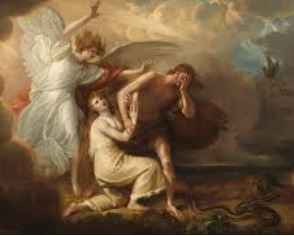
Driven out of Paradise
Why this go happen?
We don’t live in a Paradise anymore. As the inconveniences, denials, privations, sufferings, and fears of the measures we’re taking to end the spread of this virus affect our personal lives, we’ll all be asking, Why? How did this get started? Where did it come from? Who’s to blame? Is my world part of the cause? Is my society part of the cause? Am I part of the cause?

Does our Creator know about this? Does our Creator care what’s happening to us? Does our Creator want this to happen to us?
(Want a Creator joke? God is ignoring the rule to limit one’s movement and stay at home; He still plans to be everywhere.)
But we still want to know why this is happening. It’s serious. People are dying. Your friends might die. You might die, or have your lungs crippled forever. Does anyone deserve to die because of this virus?
The answer to all this gives birth to two other possibilities: It was either chance; or God knew about it and allowed it to happen or caused it to happen.

So, either this virus arose out of the “stuff of the universe” (whether assembled by mankind or not) , that is, it’s a mutation from other natural viruses and God did not stop it from happening. . . OR, God (using natural materials like viruses, I suppose) caused it to happen in order to get our attention or to punish us.
Ultimately, it makes no difference how you answer those questions today, or how you might come to answer them in the future. What unites us all is our desire for help. In the end, we want help out of this.
We try – with human policies, imposing this restriction or that; we try with personal policies, changing our behavior. We try, but we know success is a matter of “luck.” That is, success is not entirely in our own hands.
This is half a posting. I just wanted to raise the questions this time. But next time I’ll write about the other thing mankind has always turned to for needed help. And we keep doing it throughout history – because help is real.
.
I’m going to insert this family update in between my corona virus posts – I’ll get to the spiritual aspects next time — hard to know just how to talk about that. I have to look up some things first . ..
Meanwhile —

Daughter and Grandson Cooper right now are on that little airplane there on FlightAware. They’re on their way home, after a wonderful visit. They had a bit of a layover down in Houston and they’re heading to Sacramento, where they will have to turn around and drive a couple hours back east, over Donner Pass, through the snow, and then on to their own home.
So glad they made the effort! I am sending them home with a sugar high which will take a few days to fade away, I’m sure. (Hey – I’m a grandma!)
We did have some maple sugar treats, as indicated in two posts ago . . . Even though the Festival was closed down, they managed to find maple sugar candy and maple sugar cotton candy.
That wasn’t enough! The next we we made our own (cotton candy):

A sticky sugary affair, but what tastes better than cotton candy made with granulated maple sugar!!!
Even the games were “sweet” —

the Pie Face game
Why DO they find whipped cream flung in the face funny?
On Monday, their last full day here, we had our St. Patrick’s day meal: corned beef and cabbage. It came out really good this year! I got all ready with fresh sauerkraut, rye bread, Thousand Island Dressing, Swiss cheese – all ready for some Reuben sandwiches!
(But we ate all the corned beef.)
The morning of St. Patrick’s Day? We continued our sweets:

I just thought a green Jell-O parfait would be fun! The “sweet” thing about that was I got to answer Cooper’s question about who is St. Patrick and why is he important. Truly, St. Patrick was a significant figure in the development of Western Civilization. His writings are complex, intelligent, and inspiring; they’re important to know even today. You needn’t stay on the Snakes and Shamrocks level.
I will miss my daughter – what a good mother she is! What a nice person. And I’ll miss Cooper’s “inquiring mind.” Very inquiring! I’ll miss his delight with new things, his intelligence, and his sense of fun.
And I’ll miss his music:

He’s in an orchestra near his home, the Reno Philharmonic (for children). He went through some of my sheet music and found Eine Kleine Nachtmusik, which he wants to learn for his audition for the next level of orchestra. Maybe my musician father’s musical talent has skipped a couple generations, down into Cooper.
So another visit has passed. Another joy of seeing Son and Daughter together – they will always have each other, and Cooper will add happy “spice” to their lives.
I will stay positive and hopeful that I will be around for another visit.
Deo volente.

That is a gleaming black Mustang! I told Cooper (my grandson) that it’s extremely hard to take a photo of a nice black car in the sunlight because the black acts like a mirror. Here, the Mustang is reflecting the blue sky on the top half, as is Son’s GTO in the background.
So, part of my California family has come for a visit. So much for Self-Isolation! (Oh – family flew, then rented that car.) Schools in both his state and my state will be closed from now on, for several weeks, anyway, but that is probably too late to completely contain the spread of the virus from juvenile petri dishes (such as my sneezy sniffly grandson).
I haven’t made any comments on the corona virus so far, here at the Tunnel. Although I have been following this with great interest since mid-January, the story has developed and changed so much that it is hard to say anything that will be true a day or two later. And you, my readers, are hearing plenty too.
I’ve noticed changes in the reporting and especially in the comm boxes. Comments are normally good places to get additional information, but they are also good places to read trolls who give plenty of false information or who write nothing more than criticism of anything they read or hear.

I’ve noticed lately though that these nay-sayers have toned down a little bit, they’re not so obnoxious. Don’t know why. Maybe more and more of them are realizing that this is a serious situation. It’s socially “bad form” to add more negativity to our situation.
I’ve also noticed that in the past week or so the news reports have “taken a turn for the grim.” It’s not just interesting news stories getting us acquainted with what the virus is and where it is, how it’s impacting various countries, there are developments that impact all of us now. A total Lockdown in our own country no longer seems so absurd.
 At first it seemed that fear of litigation inspired the closings of public places, but the shutdowns now seem to exceed such fears.
Consistently we are told to wash hands a lot, wash surfaces, keep our distance from other people – which is hard to do in certain places, as in airport lines:

The governor of Illinois called in hundreds of firemen to help with the long lines at customs. We haven’t eliminated all crowds yet, but we’re getting there. either the virus or the response to the virus has caught us all off guard.
We’re way beyond “To Panic or Not To Panic.” That’s almost an irrelevant discussion. Now it’s: be prudent, be prepared.
We don’t seem to have consistent answers about how easily this spreads. So many doctors, nurses, lab technicians, healthcare workers, emergency personnel seem to have caught the virus. So many! Did they all use sloppy techniques? Or is this a very aggressive virus?
It would seem I’m in a good position to self-isolate; due to illness, I can’t leave my home anyway. But I do get friends coming over, checking on me, bringing me things, wonderful visits; and now my little family is here. It’s so great to be all together that the virus is sort of on our minds, but not foremost on our minds. We are still having fun.
Or trying to. Our local Maple Syrup Festival was canceled, but the maple grove was still open for walking around in, and their store was open for purchasing things such as: Maple Syrup Cotton Candy! What a nice treat!
Son, Daughter, and Cooper explored the equipment in the maple grove, cooking Cooper, not the maple sugar sap:

The virus may ruin tomorrow’s excursion too, which would be a trip to the REOlds Transportation Museum.
 This is where the Oldsmobile originated and Cooper is very much into cars nowadays.
He might a well enjoy a nice Valkyrie now at his age since he doesn’t have to worry about affording one!
So, a phenomenon shared by the whole world. That happens only in terrible disasters.
Is this a mass psychological disaster or a real physical one?
Whichever it turns out to be, no expert, no scientist, no doctor, no leader, no president can protect you, Each of us must protect ourselves to the best of our knowledge and to the best of our ability.
_________________________________________________________________
And, yes, there is a spiritual dimension to this. Next post.
I suppose many Americans wonder what it would have been like if their grandparents or great-grandparents had not left the “old country” – whatever it is – and moved to America. Presuming we’d exist, how different would we be if we still lived in the country of our families’ origins?

I’m half Finnish, half Swedish, with Lapp mixed in with the Finn and Sami mixed in with the Swede. That’s part of my identity. (I love winter!) So it is with great interest that I keep up with news from Finland and Sweden.
I heard the Finnish and Swedish languages spoken by my relatives. They all became enthusiastic American citizens, but sometimes they spoke with a bit of nostalgia for the land which they had left.
Today?
What country is this?

Some Nordic country? Scandinavian country? Point your camera anywhere in Sweden and you can find crowded streets with people who look like this. Simple fact.
And this common scene in Sweden –

I know this looks like any night in France, in one of their several No-Go zones; but this is Sweden, which also has No -Go zones — areas where Swedes are not allowed in their own country.
Nostalgia for the Old Country: 120 years later, my ancestors would be speaking with nostalgia, but also dismay, and most likely disgust after a generation of unopposed invasions by Third World peoples – intent upon changing the country they’ve invaded. Their own great-grandchildren, still living in Finland and Sweden, have failed to guard their culture and keep their countries safe. For the most part, they have turned their backs on their religion, too, so they have little inner strength of purpose.
Then what happens? I wrote in a post or two ago about the pretty young Saani Ovaska of Finland who was beheaded by her M os le m boyfriend. We have many similar stories from Sweden. Like the German women in my last post, women are cautioned not to leave their homes in the evening. Or else.
And now this from a school in Sweden:

“I belong to Islam”
It’s a page of homework one 8 year old was forced to complete and turn in to her teacher. All children in the room had to do it and were threatened with expulsion if they didn’t comply. Here’s part of the story:
According to the news portal Katerina Magasin, third-graders were forced to confess to Islam and Allah in a letter during a lesson in religious studies. Among other things, the nine-year-olds had to write “I belong to Islam”.
Anamaria von Roteliuc, the mother of a nine-year-old girl, told the magazine the pupils also had to participate in a prayer, while a minaret call was played in the classroom. Furthermore, the children had to colour a mosque on a piece of paper.
No, this wasn’t “let’s try on (Is *lam) for a day” — in order to understand “all” world religions. There was a sentence they had to write which amounts to a statement of conversion to (Is *lam). According to cultural experts, this statement is a statement of reality and cannot be rescinded . . . .
The news article went on to describe how upset some of the children were. They were actually intimidated by their teacher to carry out the not-so-mock conversion.
The girl initially refused to pledge allegiance to Allah, but had to to write “I belong to Islam” in the end.
“My daughter came home and was completely devastated”, Anamaria said. “She said, Mom, we had Islam yesterday and they forced us to say that we are Muslims. She told me that during the lesson, she jumped out of the classroom crying, ran to the toilet and prayed to God. She has been feeling bad since it happened. I myself am so angry that I’m seething. How can you do this? We are Christians and my children should not be subjected to forced Islamisation at school”.
What will become of the parents’ protests? What will change after their complaints? Where are the Scandinavian men to protect their families and their country? Where the fight?
In fairness, there are a few Scandinavian voices who do object, strenuously, to what has been done to their countries. I know some have been forced to leave Sweden because there are laws against speaking out . . . .
But . . . then what? Where is the country that my great-grandparents left? Does it even exist anymore?
Is there any culture to even be nostalgic about?
________________________________________________________
(You don’t need to look far to realize this is being done to every European and European-derived nation.)

Nowadays I go to sleep with the radio on, hear it off and on all night, and wake up still hearing the radio . . . and this morning I heard a state official talking about voting fraud, which was timely, since today our state participated in the primary elections along with a few other of our local issues.
Will our roads have enough money to get fixed? Depends on the the numbers, the election results. Will our bus services continue to run? Depends on the numbers. Will our wonderful little zoo continue to operate? Depends on the numbers.
Clearly, numbers are important to determine these answers. The count must be accurate, of course, and represent the people who actually live here. We all know that. Guarding the vote count, hanging on to our numbers, is crucial to our Republic.
On election day, all we are is a number!
But the man on the radio today said some alarming things – In the largest city of our state, more than 100% of residents were registered to vote in many of the precincts. Today. Now.
Okay, it was early morning, but even I knew there was something wrong with that statement. Each precinct has a known population, and usually not everyone votes – but what happens when there are more registered voters than the number of people who even live there?
The answer is: voter fraud happens. Who is voting? All over our country, dead people vote – because they are on the voting rolls.

And felons are voting, prisoners who are disqualified according to our voting laws:

All over our country people who are non-residents vote in local elections because they have been helped to register to vote.

The man on the radio said they have determined that as many as one out of eight people have voted without being qualified to vote. Sometimes it’s an honest mistake. People move away or die and their names don’t get taken of the list. Sometimes certain political parties deliberately harvest names from lists of people who have died. And sometimes politicians want to change the laws so more people can vote (for them) – people such as felons, citizens of foreign countries, or even people as young as 16 years old!
There are things we all can do about the problem of voter fraud, from being aware; or supporting policies to clean up our voting rolls; supporting legislators who want to reduce the problem; volunteering to work at our precincts as the votes are cast; volunteer to be an election “watcher,” honestly counting, verifying, and reporting the vote count.
That’s a Democracy Participation List of things to do.

Each fraudulent votes nullifies your own vote. Some unqualified person canceled out your vote.
If we all don’t “hang on” to the numbers of votes we cast in the next election this Fall, we give up our voting power. It’s an issue that’s going to come up real soon.
 Symbol of a quiet inner place.
A blog of random observations and thoughts after quiet times in the Tunnel.
Symbol of a quiet inner place.
A blog of random observations and thoughts after quiet times in the Tunnel.
 . .
. .
 HERE IS ONE OF HIS DESCENDANTS: My Great-Grandmother, Hilda. I admire her qualities of strength, endurance, duty, and hospitality towards all, for which she was known.
 "HILDA"

 The Spruce Tunnel